

What weeks of internet blackout did to my mind — and why the people it damaged most were not the ones scrolling for entertainment.
NOTE: I am not a social media addict; my average Instagram exploration time is 7 minutes a day.
HELLO, WORLD — AGAIN
At the very moment I am typing these words, I am not sure whether this text will ever find its way to you (any possible audience in the future). I have now experienced almost 8 weeks of continuous Internet Blackout (IB), and I don’t know whether it will come back again or not.
PART 1 - WHEN THE WORLD WENT DARK
Briefly, it started to become a form of mental torture: depression, psychological complications, and a sense of self-alienation began to appear.
1-1 HOW IT UNFOLDED
- WEEK 1 It is simple. Some of you might have also experienced something similar. It is a week when you are full of anger and frustration.
- WEEK 2 It is the week I faced a flood of depression and a loss of motivation for everything. (Not only I, but also many others, found ourselves having no motivation for doing what we had always wished to find free time to do, like hobbies and DIYs.)
- WEEK 3 In the third week, you just realize that your brain has become so goddamn foggy that you cannot even think and make decisions about the simplest things, like your daily routines.
- WEEK 4 The best way I can explain my feeling in those days is to say “I felt I was living a Plant Life”. This is when you know for sure you are literally not the man you knew before. From this week onward, the anger was almost gone, and I can’t even say exactly that I was feeling depressed.
- After WEEK 5 (a steady state) It was a very very very strange feeling of indifference toward everything in life and God’s whole universe! I did not even feel sad. Meanwhile, suicidal thoughts are coming to my mind again and again every day. What makes me afraid (apparently a small piece of firewall is still functioning in my mind) is the fact that it’s a whole new experience: thinking of suicide while not feeling any drama or rush of emotion. It feels just like a normal, rational evaluation process about whether or not to make a decision! I know such a phenomenon is likely to happen as a result of taking antidepressant medicines. However, I must mention that I didn’t take any medicine that affects my feelings and perceptions; it was just the consequence of the changes in my lifestyle that followed the internet blackout.
PART 2 - WHY DID MY MIND FALL APART?
During the blackout, nothing I could touch was taken from me: I still had my home, family, and friends. Even the street and the sun were still there.
So why did my mind fall apart the way I described in Part 1?
I am not a cognitive scientist or a philosopher. What follows is only my attempt to make sense of what happened to me.
2-1 WHAT DOES A MIND LIVE ON?
The following are separate concepts, based on a few ideas I had come across before, and I am not sure whether they fully explain what happened to me. But they gave me a language for something I had felt but could not name.
-
I had once read about sensory deprivation. In experiments at McGill University, volunteers were placed in an environment with almost no variation: blurry light, very little tactile stimulation, and a constant background sound. Most could not tolerate it for more than a few days. Their thinking became disturbed, and some even began to see or hear things that were not there.1 They were not completely cut off from their senses. What had disappeared was variation — anything new for the mind to work on.
-
I remembered another group of things I had read about: people who grow up without enough human interaction. Research on children raised in severely deprived institutions has shown how deeply human development depends on care and interaction with other people.2 Later I found that studies of solitary confinement describe another kind of suffering in adults: apathy, lethargy, difficulty concentrating, and difficulty thinking clearly.3
-
I read an article in The Economist where Harari described language as a kind of operating system that we inherit from society — something that does not simply help us communicate, but also shapes how we understand the world.4 Later, through further searching, I found out that long before that, Vygotsky had argued that inner thought develops from interaction with other people.5 Moreover, apparently a capable language was something the poor Neanderthals were lacking, so they went extinct and we became the dominant humans :)))
Let’s put all these puzzle pieces together. I think three things — the senses (the most immediate layer of an experience), language (a motor for the brain to think with), and people (sources to communicate with and refine our thoughts with) — are layers of a stream that feeds the human mind. Nowadays, many of us are literally consumers of such streams, built through the internet and the digital world.
2-2 WHAT WAS MY MIND LIVING ON?
When I read those descriptions, the dark weeks I had been through suddenly looked less mysterious. Until then, I used to sit behind my computer for hours: learning something new (coding, DIY, theories, …), hearing how people in another society think, getting lost in my code and designs, solving problems, following one idea until it opened another. Then, overnight, it all disappeared. It felt like my eyes and ears could only reach a world full of strange emptiness. Imagine a mind that has spent years solving puzzles every day, and then one morning every puzzle is gone. It does not simply get bored. It starves.
Looking back, I do not think the internet was simply a place where I consumed information. It was actually a platform/environment in which my thinking happened. There were the things I learned. There were the problems I tried to solve. There were people from completely different parts of the world whose ideas I could encounter in minutes. There were conversations that would probably never have happened anywhere around me. And, perhaps most importantly, there was always another puzzle.
This is where an idea from Andy Clark and David Chalmers began to feel strangely relevant to me. Their “extended mind” argument suggests that the tools we rely on for thinking can, in some sense, become part of the thinking itself.6 I might even say the digital world had literally become part of my mind (and perhaps it has for many of you). At least I can say for sure that this is how I felt while I was experiencing the internet blackout.
Perhaps this is also why I had the impression that people around me were affected differently. For someone whose main use of the internet was entertainment, much of what disappeared could still be replaced: television, games, talking with friends, going outside.
2-3 WHAT MIGHT YOUR MIND BE LIVING ON?
I have no study to prove this, and all I have is my own experience and my observations of the people around me during the internet blackout. Yet my experience was so powerful, and the conclusion is important enough, that I decided to discuss it with others (you): We often talk about the dangers of digital life in terms of distraction, addiction, or entertainment. But perhaps there is another kind of dependency that is much less visible. For some people, the internet may be just a tool (e.g., for paying bills) or a place for entertainment. Nevertheless, there are some whose being — how one feels and perceives oneself as a self — is entangled with their daily experience in digital environments. The second group are individuals who satisfy their intellectual hunger through the digital world.
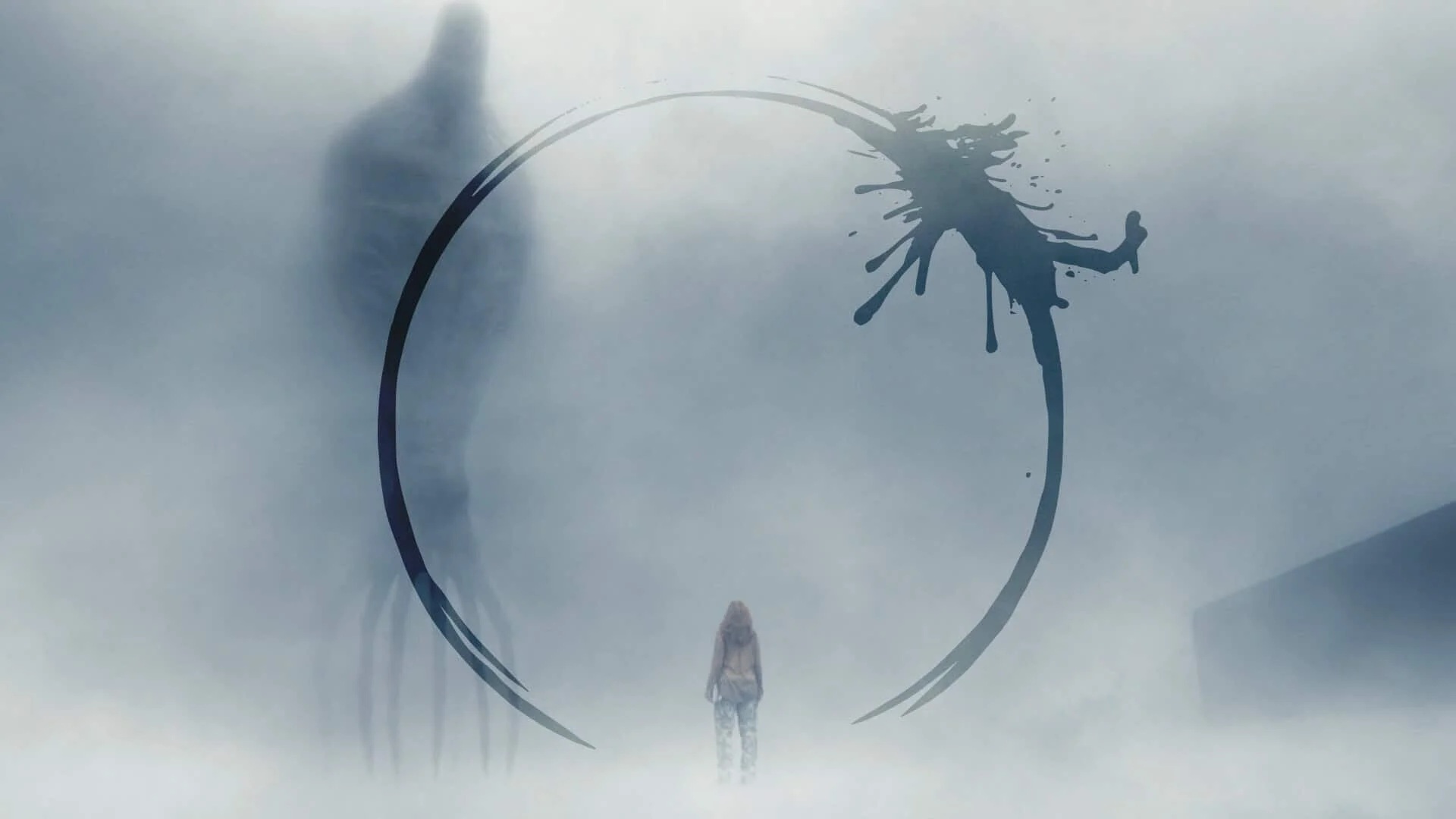
In conclusion, it might be worth it for those of you who do not live in Iran to sometimes imagine the whole world (or a part of it) suddenly going digitally dark because of a war, a political decision, or some other catastrophe — especially now that the real world is going crazy, and no one can be certain where these changes will lead. In Arrival, the gift brought to humanity is a new language — something that changes what the human mind is able to perceive and understand.7 Maybe the opposite can happen too: if a richer language can open a mind, losing the place where you share thoughts can close one. I do not have a solution or a preparation checklist for this. I only think people like me should be well aware that such a dependency exists, because sometimes you do not discover what your mind has been living on until it is suddenly taken away.
WHERE THESE IDEAS CAME FROM
Footnotes
-
Bexton, W. H., Heron, W., & Scott, T. H. (1954). “Effects of decreased variation in the sensory environment.” Canadian Journal of Psychology, 8(2), 70–76. ↩
-
Nelson, C. A., Fox, N. A., & Zeanah, C. H. (2014). Romania’s Abandoned Children: Deprivation, Brain Development, and the Struggle for Recovery. Harvard University Press. ↩
-
Grassian, S. (1983). “Psychopathological effects of solitary confinement.” American Journal of Psychiatry, 140(11), 1450–1454. ↩
-
Harari, Y. N. (2023). “AI has hacked the operating system of human civilisation.” The Economist. ↩
-
Vygotsky, L. S. (1934). Thought and Language. ↩
-
Clark, A., & Chalmers, D. (1998). “The Extended Mind.” Analysis, 58(1), 7–19. ↩
-
Villeneuve, D. (Director). (2016). Arrival. Based on Ted Chiang’s “Story of Your Life.” ↩